9 min read · Updated 1 May 2026
Investing in Bali Real Estate 2026, ROI, Risks and Rewards
By Lipah Hills Resort · first published 15 April 2026
Bali property regularly promises 12 to 18 percent annual return. Some of those numbers are real, others are marketing. Here is what foreign investors should actually expect in 2026, with the math, the risks and the legal context.
Bali real estate has had a remarkable post pandemic recovery. International arrivals returned to pre 2019 levels in 2024 and the premium hotel segment now grows roughly 12 percent year on year, according to data tracked by AirDNA and Statistics Indonesia. For foreign investors, this is one of the few markets in Asia where you can still buy into a refined boutique resort under EUR 200.000 with credible operating partners and a transparent payment structure. Below we walk through what is really driving returns, where the risks sit and how to evaluate a project on its merits, not its brochure.
Why Bali, and why now
Three trends matter for the next decade.
First, supply and demand are misaligned. Tourist arrivals are growing faster than premium hospitality stock. South Bali, particularly Canggu and Seminyak, has hit a saturation point. Traffic is dense, rates are softening and new builds compete on price rather than experience. East and North Bali are seeing the early stage growth that South Bali enjoyed in the 2010s. We dive deeper into this shift in East Bali vs South Bali, where smart investors are looking.
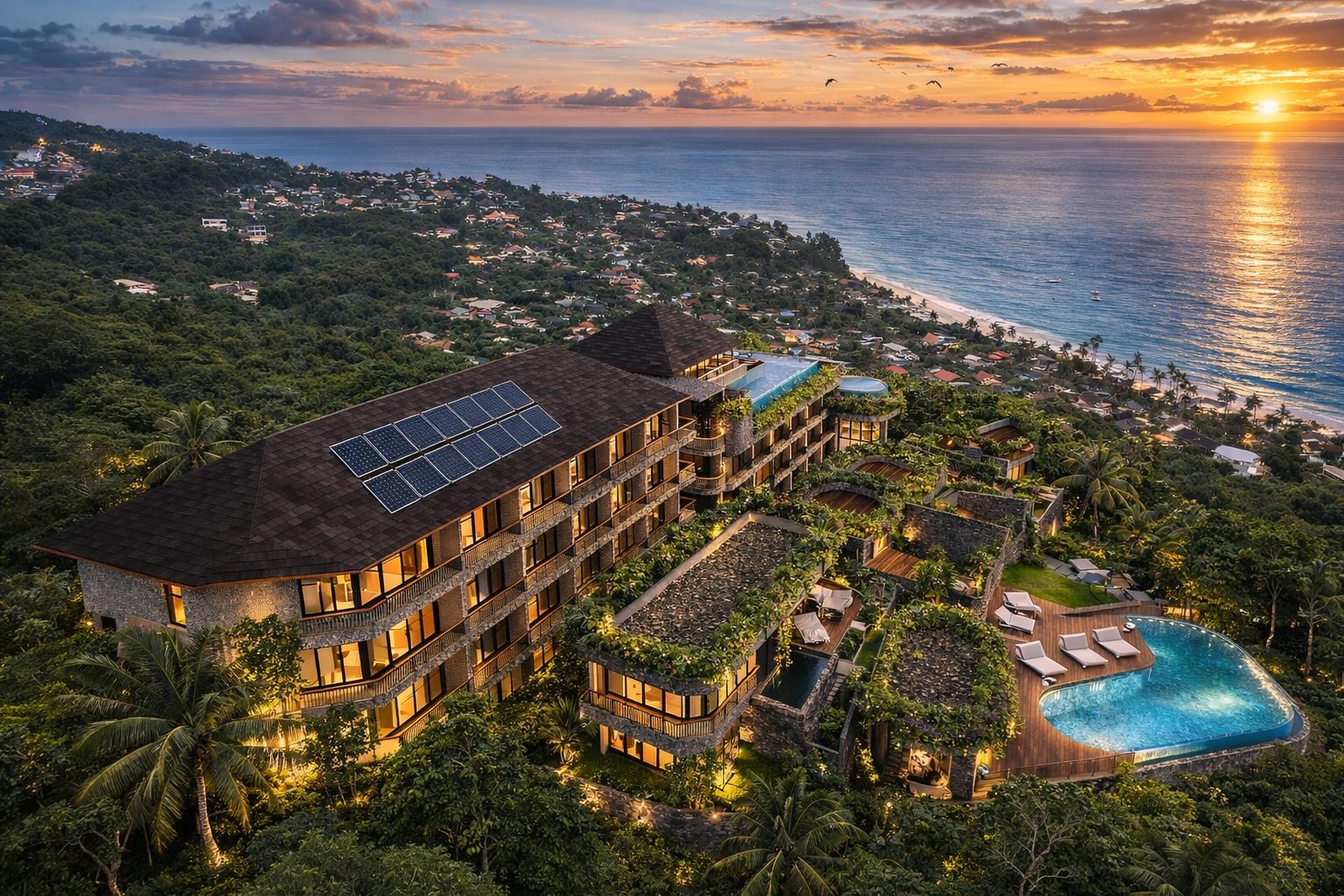
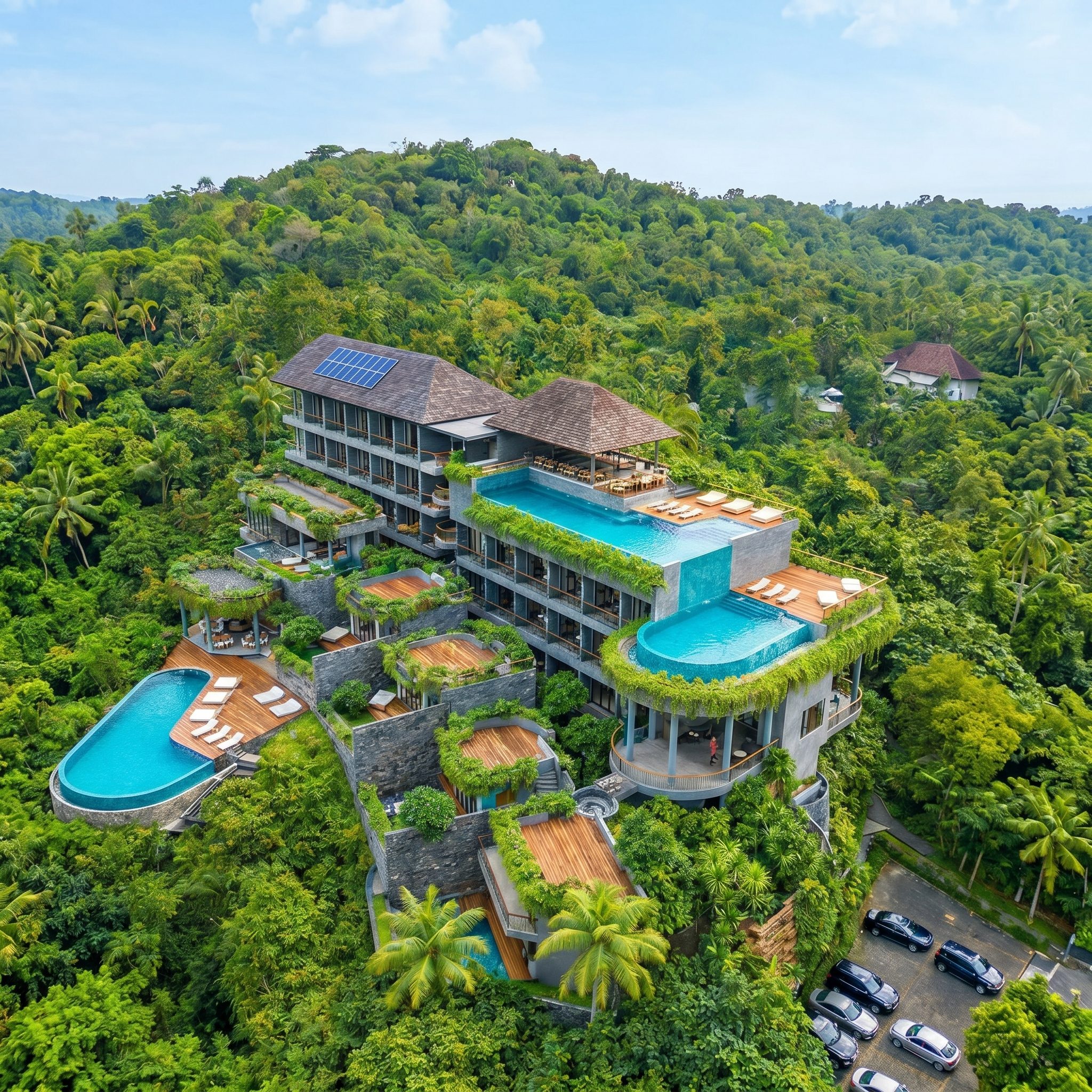
Second, the boutique segment outperforms. Travellers who stayed in a generic 4 star hotel in 2017 are now booking design driven boutique resorts with 30 to 50 keys. Daily rates above EUR 250 in this segment are sustainable when the experience is curated. Lipah Hills Resort, with 36 apartments and 5 villas, sits exactly in that boutique sweet spot.
Third, infrastructure is upgrading. The proposed Amed Harbour and the ongoing improvements to the road network from Ngurah Rai Airport to East Bali shorten the perceived distance for travellers. East Bali becomes a 2.5 hour drive instead of a 4 hour expedition.
Real ROI numbers, not marketing fantasy
A defensible Bali boutique resort investment generates 8 to 15 percent annual return on the entry price, depending on occupancy and management efficiency. Anything above 18 percent is either pre completion sales discount or aggressive accounting.
Take a EUR 130.000 unit at Lipah Hills as an example. At 65 percent occupancy and an average daily rate of EUR 80, gross rental income is approximately EUR 18.980 per year. After a 30 percent management and operational fee, the net to the owner sits around EUR 13.286. That is 10.22 percent on the entry price. At 75 percent occupancy and EUR 85 daily rate, the same unit returns 12.53 percent. At 85 percent and EUR 90, 15.04 percent. Break even ranges from 9.7 years (conservative) to 6.6 years (optimistic). The full per unit scenarios are on the villas and pricing page.
These numbers assume a competent operator, reasonable maintenance reserves and a tourist market that grows with Bali overall. Skip a strong operator and your numbers fall fast.
Legal basics for foreign investors
Indonesia does not allow foreign nationals to hold freehold land. This is constitutional, codified in Article 33 of the Indonesian Constitution and the Basic Agrarian Law of 1960, and it is not negotiable. Foreign investors structure ownership through one of three legal forms.
- Leasehold (Hak Sewa), the most common path. Initial term up to 30 years, often extendable by 20 to 30 years. You control the property for the lease duration. Lipah Hills uses a 30 plus 20 year structure. We explain the mechanics in the complete leasehold guide for foreigners.
- PT PMA, a foreign owned Indonesian company that can hold Hak Pakai, a usage right. Adds tax and corporate compliance overhead, useful only for serious operators.
- Nominee structures, where an Indonesian citizen holds title on your behalf. This is technically illegal under Indonesian law and the courts have voided several such arrangements. Avoid nominees.
For most boutique resort investors, leasehold via the developer is the right structure. Read the lease agreement carefully and verify the underlying land title is clean through the Badan Pertanahan Nasional (Indonesian Land Office) before signing.
Off plan vs ready property economics
Off plan property in Bali typically prices 20 to 30 percent below comparable ready inventory. The discount reflects construction risk and the time value of your money during the 18 to 24 month build. Investors who time the market well capture that gap as paper appreciation. Investors who pick the wrong developer absorb delays without protection. We compare both paths in detail in off plan vs ready property in Bali.
Ready property removes construction risk but also the discount. You start earning rental income immediately, which suits investors who need yield from day one rather than capital growth.
Risks you must understand
Currency. Your investment is in Indonesian Rupiah at the exchange rate on signing. A 10 percent IDR depreciation against the Euro reduces your effective ROI by roughly the same. Hedge if you are sensitive.
Regulation. Indonesian property and tax law evolves. The 2023 Omnibus Law clarified leasehold extensions, but future changes are possible. Work with a developer that adapts.
Oversupply pockets. Canggu and Seminyak now have more boutique stock than premium demand. New buyers there compete with hundreds of similar units. Less saturated areas like East Bali around Amed offer better forward returns.
Operator risk. The single biggest variable in your actual return is the quality of the operator. A boutique resort with a strong management team at 75 percent occupancy outperforms a flagship hotel at 60 percent. Vet the operator harder than the developer.
How to evaluate a developer
Track record matters more than glossy brochures. Ask three questions of any developer.
- What have you delivered before, and can I visit it. Lipah Hills is built by PT Ayo Uma Tourism Group with architecture by Popo Danes Architects, who has delivered projects like Munduk Moding Plantation and Permata Ayung Private Estate. All public, all rated above 9 by guests.
- Are payments held in escrow. Reputable developers stage payments against verified construction milestones, not against arbitrary dates.
- Are building permits and land titles verified by an independent notary. Always verify, never assume.
Next steps
If you are serious about a Bali real estate investment in 2026, narrow your shortlist to two or three projects with credible operators in undersaturated areas, request the full financial simulation per project and visit at least one site before signing. The brochure tells you what they want you to see, the visit tells you what they actually built.
Lipah Hills Resort opens reservations in waves to honour the boutique scale. If East Bali, Popo Danes architecture and a 30 plus 20 year leasehold structure align with your strategy, request the full brochure with floor plans and the per unit financial scenarios.
Frequently asked
Quick answers to common questions
What is a realistic ROI for Bali boutique resort investment in 2026?
A defensible Bali boutique resort investment generates 8 to 15 percent annual return on the entry price, depending on occupancy and management efficiency. At 65 percent occupancy a EUR 130.000 unit returns roughly 10 percent. At 85 percent occupancy that rises to 15 percent. Anything above 18 percent is either pre completion sales discount or aggressive accounting.
Can foreigners own land in Bali?
No. Indonesia does not allow foreign nationals to hold freehold land. This is codified in Article 33 of the Indonesian Constitution and the Basic Agrarian Law of 1960. Foreigners can structure ownership through leasehold (Hak Sewa) for 30 to 50 years, or through a PT PMA company holding Hak Pakai usage rights. Nominee structures, where an Indonesian holds title on your behalf, are illegal and courts have voided them.
Is off plan or ready property safer in Bali?
Ready property is safer because there is no construction risk. You see the actual finishes and start earning rental income immediately. Off plan is 20 to 30 percent cheaper but you accept construction risk and a 12 to 24 month wait. Most foreign investors at the EUR 130.000 to 260.000 entry tier prefer off plan because the capital appreciation during the build offsets the wait.
How do I verify a Bali developer is legitimate?
Three checks. One, ask for delivered projects you can visit, not renders. Two, verify payments are held in escrow against construction milestones, not arbitrary dates. Three, run building permits and land title through an independent Indonesian notary at your expense. The few hundred Euro spent on verification protects six figures of investment.
About the author
Lipah Hills Resort
Lipah Hills Resort is an off plan boutique development in Amed, East Bali, by PT Ayo Uma Tourism Group and designed by Popo Danes Architects. We publish independent analysis, not marketing copy, so investors can rely on honest numbers.
Ready to explore the project
Request the full Lipah Hills brochure
Floor plans, the full per unit financial scenarios, the leasehold structure and the construction timeline. Sent within one business day.